Daily Archives: February 12, 2019

Dante Struggles with Greed

At the start of Canto 6, the pilgrim again awakens in the next circle of hell, the third circle. In this circle, the souls are subjected to eternal heavy rain. It is revealed they are cursed to be in this circle because of the gluttony in life. Cerberus is also here, a creature from Greek mythology that is a dog-like animal with three heads. When Virgil manages to distract Cerberus, the pilgrim begins talking to one of the souls, who says, like Dante, he is from Florence. The pilgrim asks if he knows what will become of their city, and names a group of men he sees as good. The man, who Dante names as Ciacco, answers that all the people the pilgrim asked about are even further down in the circles of Hell.

This Canto introduces us to Dante’s perspective of Florence, which Ciacco claims is full of greed and envy. Canto 6 illustrates that Dante does not only very greed as related to money or food, but also power.

Instead of feeling dislike towards Ciacco, the pilgrim appears to only pity him, even after Ciacco has revealed it was greed that sent him there. Dante feels sadness towards Ciacco, rather than resentment.
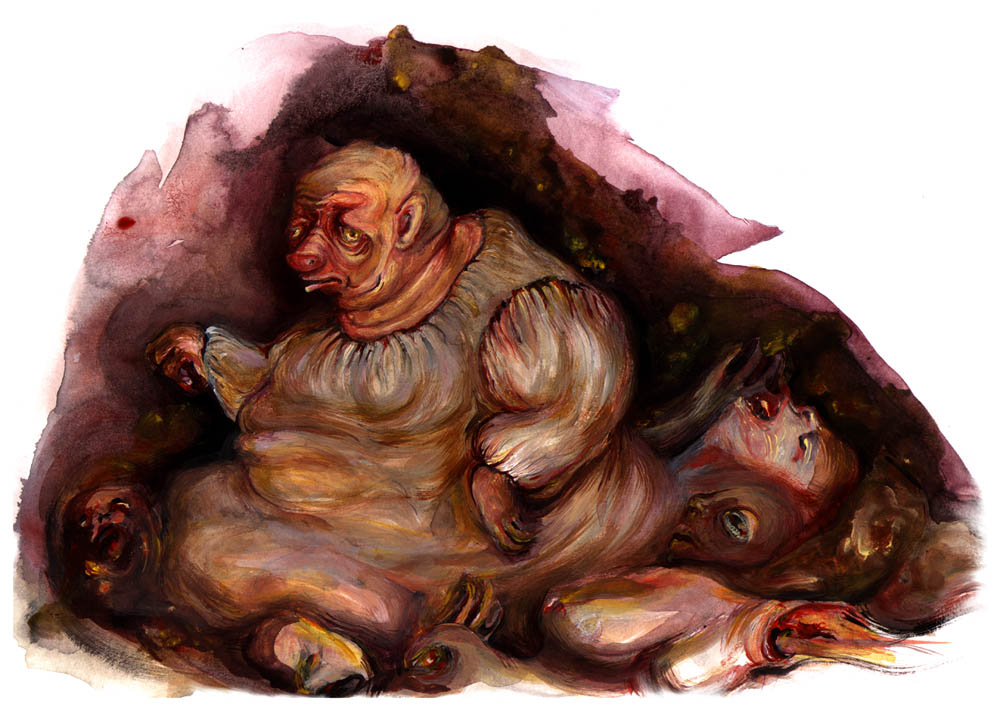
The Gluttonous Politics of Florence

“Ciacco” – Suloni Robertson (http://danteworlds.laits.utexas.edu/gallery05.html)

In Canto 6, Dante awakens in the third circle of hell. He finds himself surrounded by suffering spirits who are punished by an “eternal, cursed, cold, and heavy rain” (7) because of their indulgences and greed. Dante encounters Cerberus, the mythological three-headed dog-like demon beast, who continuously barks at the cursed souls. Then, Dante comes across a soul who asks him, Dante, to “recognize me if you can.” Dante cannot recognize him because the soul no longer looks like his living self but he is Ciacco of Florence who is punished in the third circle of hell for his sin of gluttony. According to UTexas’ Dante Worlds, Ciacco may be a derogatory reference to “pig” in the Florentine dialect of Dante’s day which is probably why Suloni Robertson depicts Ciacco as a stuffed pig in her painting. The pig is used as a metaphor for the excessive greed politicians often use for their own personal gains. Ciacco explains to Dante that there all the others in the third circle also “endure similar punishment for similar guilt” (55-56). Dante weeps again for Ciacco’s suffering and troubles but once he realizes who is speaking to he wants to know the future of Florentine politics. Dante asks Ciacco if worthy men are in heaven or hell and Ciacco responds, “They are among the blacker souls” meaning despite their certain good actions in life their selfishness punished them in the deeper circles of hell.

Canto 6 shows how massively important the politics of Florence are to both Dante the writer and Dante the character. Florence is something that personally affects Dante and this is the first place in Inferno where politics are thoroughly introduced and the focus is what is going to happen to Florence.


The Poet’s Wrath


Illustrazioni sulla Divina commedia di Dante [in 4 portfolios]
https://library.artstor.org/#/asset/SS33624_33624_33393782;prevRouteTS=1549948920011

In Canto 8 we experience a new Dante that we have not seen in the previous canto. In the fifth circle of Hell Dante and Virgil are crossing the Styx on a boat when they meet someone that Dante recognizes, this person is Filippo Argenti who is Dante’s nemesis in real life. Here we can see Dante the poet heavily intrudes into the story basically supplanting himself as Dante the character. The once sympathetic character who fainted out of pity from listening to a bitter love story is now replaced by a person who wishes to see someone suffer further punishment “Master, much would i desire to see him ducked in this broth before we leave the lake” (52-54). It goes even further to the point where Filippo Argenti is being torn to shreds but Dante is not shocked or disgusted by it, instead he revels in it and praises God for this event. Everything in the canto is against him Dante, Virgil, even the other sinners, here we can see the ruthlessness of Dante the poet providing a sharp juxtaposition between the two Dantes. On one hand we have a Dante that weeps with excessive pity to the poor souls that are damned, on the other we have a Dante that put these souls in hell and condemned them believing that they deserved to be placed there for their sins that they have committed. Dante the poet seeming to give into his wrath and write about the condemnation of his real life enemy to suffer in Hell for the sin of wrath gives this canto a bit of morbid irony.
