Daily Archives: February 11, 2019

Canto 6: Gluttony

Overview of Gluttons (3rd Circle of Hell)

Vellutello, Alessandro

Dante bases his definition of gluttony on his own experiences in Florence. While gluttony’s literal meaning is an excessive consumption of food and drinks, Dante broadens the definition to include an excessive acquirement of wealth and power that is obtained at the expense of the city’s civilians. Dante perceives wealthy politicians that exercise more power than what it rightfully allocated to them as guilty of neglecting their civic duties. Dante’s understanding of corruption pertains to his own experiences as political figure in Florence. He introduces his city’s political dynamics through Ciacco. The condemned soul claims that “your city is so full of envy that the sack already overflows” (lines 49-50). The soul is referencing his own experiences in Florence before Dante was born; they most likely refer to the class conflicts between the magnate and the plebeians. The magnate were the wealthy Italian merchants whereas, the plebeians were the commoners. During this time, the plebeians banned the magnate from holding a political position in society. The constant desire for each class to exert their dominance over the other in terms of wealth, prestige, and power frequently plagued Florence’s society, hence the city was already displaying symptoms of gluttony. Ciacco foreshadows the city’s absolute fall to gluttony and Dante’s own exile from Florence. He claims that “the citizens of the divided city” (line 61) will “come to blood, and they party from the woods will drive out the other with much harm” (lines 64-65). The “divided city” refers to the Black and White Guelphs fractions that formed after the Guelphs took control of Florence after defeating the Ghibellines. The Black guelphs approved of the Pope whereas, the White Guelphs including Dante, wanted more independence from the Pope ; hence they were categorized as “the heirs of the Ghibellines” (Museo Casa de Dante). The White Guelphs are “the party from the woods” that drive the Black Guelphs out of Florence after a blood batter which Dante also participates in. However, Ciacco claims that “Then later this party must fall within three suns and the other rise, with the power of one who now hugs the shore” (line 67). Ciacco foreshadows that after 3 years or “three suns,” the Black Guelphs will regain control of Florence while the White Guelphs, including Dante who was an active prior (White Guelph leader) will fall. Ciacco implies that Florence’s internal political turmoil is a manifestation of gluttony itself that will only be intensified when the Black Guelphs will conquer Florence. Ciacco even specifies that “Two are just” (line 73) in the war, which most likely refers to Dante himself and maybe one of his acquaintances. This further reiterates how Dante perceives himself as an anti-corrupt political figure whereas, anyone else who doesn’t govern in the same manner as him is immediately guilty of corruption and in broader terms- gluttony.

Dante uses food imagery as a metaphor for the political corruption that characterizes Florence. In Canto 6, there is a repetition of “heavy rain” (line 7, 32). The heavy rain is actually the physical food and drinks the souls consumed during their lifetime. These souls are most likely political figures who obtained these luxuries at the expense of their subjects. Since they were so greedy for these possessions, they’re raining down on them now. Ironically, the rain fulfills their human desire for materialistic possessions while simultaneously keeping their souls in hell under the heavy weight of their own desires. Ciacco’s status as a corrupt political figure is further reiterated when the word “heavy” is used again to describe an oppressive force. The Ghibellines were described as “Long will they hold their brows, keeping the others down under heavy weights, no matter how they weep or are shamed.” lines 70-71). While there is no implication that Ciacco was a Ghibelline, the word “heavy” is used twice in Canto 6, once to describe the corrupt behavior of politicians and the other to describe the rain, both are oppressive forces. The author is equating the heavy oppression and political injustice with heavy rain which serves as their punishment. This implies that Ciacco himself must’ve been a “heavy” oppressive force in Florence in order to be punished by the “heavy” rain. The rain parallels the nature of the oppressors. The oppressors didn’t care if the subjects “weep or are ashamed”, likewise, the rain doesn’t care if the souls weep or display shame with their “bent heads” (line 92). Moreover, the rain’s “rule and quality never change” (line 9) just like the politicians never changed the unjust way they governed society. Ciacco represents how corrupt political figures are punished on a microscopic scale. He asks Dante about Florence’s corrupt political figures such as Farinata, Tegghiaio, Iacopo Rusticucci, Arrigo, and Mosca. He uses food imagery to ask if “Heaven sweetens them or hell poisons them” (line 84). The sweetened food represents what the politicians earned while the poisoned food represents what they wrongfully consumed. This alludes to the Adam and Eve’s unlawful consumption of the apple in paradise which ultimately poisoned them and they fell through the ranks. Similarly, these political figures consumed what they weren’t supposed to and fell through the virtuous ranks into hell. Hence, Dante observes that all these souls have “the emptiness that seems a human body” (line 36) which means that their soul is empty because they always fed their body instead of their soul. Their empty human body is actually their empty stomach, it doesn’t have any food because they fed materialistic content to their body instead of substantial virtues and deeds to their soul. Thus, it becomes apparent that their gluttony left their souls hungry and their bodies eternally empty.

Citations:

“Florence at the Time of Dante Alighieri.” Museo Casa Di Dante, Firenze, www.museocasadidante.it/en/dante-alighieri/in-florence/.

Additional Information:  The image is from the University of Texas at Austin. The image depicts the 3rd circle of Hell where the “food” is raining down on the gluttons.
The Power to do Good

Image result for canto 7

http://danteworlds.laits.utexas.edu/circle4.html

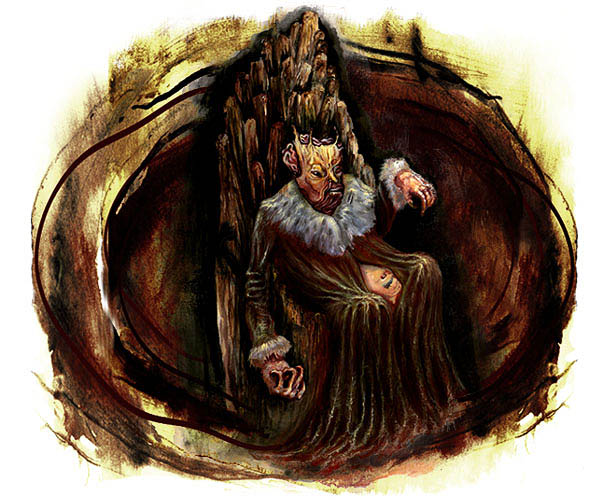
In Canto 7 Dante descends to the 4th circle where there are two kinds of dammed dwelling. That of avaricious and prodigal nature respectively. It is interesting to see that two sides of the same coin are to be stuck in the same circle of hell. Both, with one thing in common which is the misuse or the lack there of of their power. Money is a driving force in the world that Dante lives in and even in the world that we live in , so it is understandable to see where being corrupt or loose with money can make you end up. Furthermore, this Canto provides insight on the power struggle and self control people in high places must maintain in hopes of not ending up in the 4th circle of hell. Today, especially, we can relate this to our messed up political system in which the rich are meant to become richer because of their power and the system that adheres to them. Also, with many musical artists, particularly hip-hop artists that misuse their money and spend a large chunk of it on unnecessary materialistic things that have come about from war and bloodshed.  When thinking of the subject of money and monetary actions of good and bad it is helpful to refer to this Canto as well as this painting or image that I found on the web which is meant to resemble Plutus, the demon which Dante encounters, but I feel this demon painting resembles more anyone that is enslaved to the thirst for money. Just like any other addiction, massively hoarding or wastefully spending money can be looked at as a disease in which there may be no cure once too far gone.


Filippo Argenti: The Daring Soul

(Image found in Danteworlds (UTexas) > Inferno Gallery > Circle 5; Painting is entitled: Filippo Argenti and is painted by Gustave Doré)

Throughout each Canto, each encounter with the damned invokes a strong emotional reaction in Dante. For example, in Canto 8, as Phlegyas is rowing Dante and Virgil across the Styx river, they meet Filippo Argenti. He is covered with mud and inquires to know why Dante, as part of the living world, is journeying through Hell. When Dante makes it clear that he recognizes the anguished soul despite his muddy appearance, Argenti reaches out to touch the boat or perhaps, Dante, evidently attempting to endanger him. After Virgil pushes him away and comments on the lack of goodness in Argenti’s soul, Dante replies, “Master, much would I desire to see him ducked in this broth before we leave the lake,” (52-53). In other words, Dante is expressing to Virgil a new emotion that strongly contrasts to previous reactions. In past Cantos, Dante would show pity towards souls who would share their stories with him. He would become so overwhelmed with pity and sorrow that he would faint soon afterwards. Here, Dante conveys disgust and alarm at Argenti’s daring behavior in which he puts Dante and Virgil in peril of falling into the river.

Although the moment passes quickly, Dante desires to witness Argenti’s disappearance into the Styx river, himself, so that he may feel more secure and relieved. Later on, Dante recounts, “A little later I saw him torn apart by those muddy people in such a way that I still praise God and thank him for it,” (58-59). This statement indicates that Dante feels a great sense of relief at witnessing Argenti’s violent and forcible descent into the Styx river, thanks to the other muddy anguished souls present in the river. Although Virgil comforts and shields him from being harmed, this event evidently makes him feel even more at ease. Ironically, Dante thanks and praises God, up in Heaven, for this particular event that takes place in Hell, for paying heed to his terror.

Cerberus and the Third Circle


this image is from the Gutenberg website

“http://www.gutenberg.org/files/8789/8789-h/images/06-067.jpg”

I’ve decided to reflect upon Canto 6 because one of the well-known beasts of mythology (Cerberus) is introduced. Dante finds himself in the third circle known as the gluttons.in this circle, Dante feels tormented by the souls that are present and fills him with sadness. The gluttons is filled with impurity, heavy rain, snow and dark air. Cerberus is detailed to be “a cruel, monstrous beast, with three throats barks doglike over the people submerged there”(Canto6, line13-15). The climate and environment are what causes Cerberus to act more like a beast and eventually aggressive towards the souls that are casted out to that circle. A glutton is defined to be an excessive greedy eater and that is proven in canto 6 when Virgil throws some “earth” after Cerberus opened his mouth and displayed its fangs. “And my leader opened his hands, took up earth, and with both fists full threw it into those ravenous pipes”(lines 25-27). Ciacco is introduced in this canto and he is the first Florentine person that Dante encounters. Ciacco is also filled with the sin of gullet which is enhanced by the dreadful rain. Towards the end of the Canto, Dante asks Virgil in respect to the severity of the pain and torments that the souls will experience; Virgil replies to Dante by telling him that he should stick with his Aristotelianistic philosophy. Personally, I think that Virgil could’ve been more clear to Dante instead of ignoring his question.

The Doomed Souls

In canto six Dante (the pilgrim) awakens and is entering the third circle of Hell. In this level of Hell, he is surrounded by punished spirits/ souls who constantly face a dirty, miserable rain which is contaminated with feces. This rain is a reminder that as Dante proceeds, the punishment in each circle is greater than the previous circle. The rain is significant because the spirits are constantly trying to shield themselves from it; the rain is also a symbol of the sin of gluttony. Dante comes to face the three-headed dog named Cerberus, but Virgil throws dirt into the monster’s mouth which allows the beast to let them pass. As Dante and Virgil proceed their journey one of the spirits asks Dante if he recognizes him, Dante however, doesn’t. The spirit explains that he Ciacco of Florence and he was damned amongst the others for the sin of gluttony. Ciacco also tells Dante that other figures of Florence’s political past such as: Tegghiaio, Farinata, Arrigo, Mosca, Jacopo Rusticucci, are all in a much deeper circle of Hell. Then Ciacco tells Dante that when he returns to life, that Dante should remember his name. We have already seen in canto 3 “Gate of Hell” that the punishment of the cowards is that they can’t be remembered. These sinners are not worth writing about because they are unaccepted in both Heaven and Hell because they couldn’t choose God nor Lucifer. This is significant because through Dante the writer, we are able to learn about these people and although Dante feels Ciacco’s sin is greater than the cowards, Ciacco shouldn’t be remembered for his gluttony but someone who was concerned about Florence – therefore, Dante the (pilgrim) weeps for the suffering of Ciacco and those damned souls around him. Ciacco feels by having his name mentioned will allow himself to alleviate his agony. The important line in this canto written by Dante states, “And my guide said to me: “He’ll rise no moreuntil the blast of the angelic trumpet upon the coming of the hostile Judge.” The reason this line is significant is because Virgil is referring to the last judgement; in which Christ comes down to earth to judge all human souls in which he decides who goes to purgatory (saved souls) and those who go to Hell (the damned souls). However, because the last judgement still hasn’t arrived Ciacco is punished for his gluttony because of his imprudent gratification of drinking and eating excessively, however, the contrapasso is the opposite of this. When the “Second Coming of Christ” happens the suffering of the damned souls will feel an even greater punishment because the sinners will be reunited with their bodies, they will not only be more complete and more ‘absolute’ but also their punishment will be felt even more entirely. In Canto 8, the 5th circle of Hell, while crossing the water, Dante recognizes a spirit, Filippo Argenti. Argenti is Dante’s political enemy in real life – he is spiteful and dissatisfied because he is not remembered as a positive character and has no good qualities written about him. In reality, Ciaccoand Filippo Argenti were both living characters and Dante knew them. Therefore, they are notable during the political events that occurred during Dante’s Florence. The message Dante is trying to suggest is that Hell is not something a make-believe, nonexistent place that is distant, but a place that threatens those who find themselves there.  A few important lines in Canto 8 is lines 34-42 when Dante writes, And I to him: “In weeping and in grieving, accursed spirit, may you long remain; though you’re disguised by filth, I know your name.” My master quickly shoved him back, saying: “Be off there with the other dogs!” The lines are significant because for once Dante actually doesn’t feel pity for the souls, unlike previously with Ciacco, Paulo Francesca and others. He takes pleasure for the pain Filipo Argenti receives. Dante condemns the sinner by being angry with Argenti because he fails to identity himself. In conclusion, Virgil feels Dante (the pilgrim) is learning and is happy that Dante doesn’t feel pity/ sympathy for the sinner and is seeing that Dante’s perception is developing.


Dante’s Vision of Contrapasso in the Punishment of Sin


The idea of contrapasso in Dante’s Inferno is the pairing of sin with appropriate punishment. This is a theme evident in Dante’s first two circles as well as his “anti-inferno” in Cantos 2-5, and is further illustrated in Canto 6. Souls who have committed a certain degree of sin are sentenced to a specific circle, in which their sin is met with punishment equal to their acts against God’s will, and similar in execution. I might go so far as to describe the pairing of punishment and sin poetic, an almost ironic end for sinners who pervaded the will of God with their own.

As Dante wakes from his earlier faint in the 2nd circle and finds himself surrounded by the souls of the 3rd circle, Dante’s heavy imagery illustrates the punishment of the gluttons. These souls were poisoned by greed, and are now pelted by an eternal rain of snow, hail, and dirty water: “The rain makes them howl like dogs; they make a shield for one of their sides with the other; cast out wretches, they turn over frequently.” (19-21) As gluttons, their punishment is to lie in the mud as pigs writhing in the dirt, a comment on their state on earth. This is exemplified by Ciacco, an individual who earned his name for “the damnable sin of the bullet.” The idea of contrapasso is further and perhaps best illustrated in Canto 7. In the fourth circle, the avaricious push weights against each other. Those who spent too much or hoarded too much push against each other, poetically colliding against the opposite sin and calling out “Why do you hold?” and Why do you toss?” (29-30) Just as these souls went against the will of Fortune, a device of God, they now take what they have (their weights) and collide and push against each other, a metaphor for their behavior on Earth.

Ultimately, I believe that Dante wanted to express that hell reflects degrees of sin, but also that hell matches sin with a poetic punishment given the sin. This idea of contrapasso is shown in the pieces of the Inferno which we’ve seen, and continues to be a main theme for Dante’s vision of Hell.

Dante’s Lack of Sympathy in Cantos 6-9

I am struggling a bit with this prompt because I don’t find that Dante has much sympathy to give the damned in Cantos 6-9. Perhaps I am misreading the text but compared to the sympathy I perceived him to have for Francesca and Paolo, to the point where he fainted after witnessing their plight, the under current of emotional reaction is missing in my readings of these canto. Unfortunately, it is hard to find textual examples of a lack of emotion so instead I will focus more generally on his depiction of the Gorgons (or Erinni, they are described as Gorgons but labeled as Erinni elsewhere), found in Canto 9 lines 37-57. The story of Medusa and her sisters, found mostly in Ovid’s Metamorphosis 4.606-5.249 is heartbreaking in my opinion although apparently not to Dante. The story is basically that Neptune, God of the Sea, raped Medusa in the temple of Minerva. This angered Minerva causing her to punish the rape victim instead of her uncle the rapist by turning her into a woman with snakes for hair who could turn anyone who looked her in the eye into stone. She is later slain by Theseus who is assisted by the Gods. The mention of Medusa, who does not make an appearance in this canto, implies that she is in Hell suffering for her “crimes”. Unlike Francesca and Paolo, whose “crimes” were also sexual in nature and who Dante has the upmost sympathy for, there is no weeping or fainting over Medusa. While I understand Dante is told by Virgil to fear Medusa it is possible to both fear and pity someone. We can almost certainly say that Dante (the Poet) was very familiar with the works of Ovid since he references them countless times and therefore must have known the story of Medusa. The concept of rape has changed over time and neither Ovid nor Dante (the Poet) may have considered Medusa a rape victim. However, this isn’t the only instance of Dante’s lack of sympathy in Cantos 6-9. I will be paying closer attention to who Dante sympathizes with throughout Inferno and who he condemns.


Inferno Canto 9 Verse 46. Engraving by Gustave Doré found in an edition of the Divine Comedy on Project Gutenberg. Both book and artwork are in the public domain.


Gluttony, Cerberus, and Ciacco

I got the image above from the website below.
http://danteworlds.laits.utexas.edu/gallery05.html

In Canto 6, Dante finds himself surrounded by new sinners that are suffering and this third circle he entered is the gluttons. It always seems to be raining in this circle, but it is not pure water, it is dirty water that’s polluted, smelly, and filled with hailstones too. Cerberus is introduced; he is a gigantic three-headed guard dog of the underworld. In line 13 he is described as “cruel, monstrous beast, with 3 throat barks doglike over the people submerged there” (Inferno). Moreover, in line 15 “his eyes are red, his beard greasy and black, his belly large and his hands have talons; he claws the spirits, flays, and quarters them”. Moreover, Cerberus himself is considered a glutton when Virgil picks up a handful of stinky mud, throws it into Cerberus’s mouth and he eats it. Additionally, Ciacco from Florence is introduced. His sin was also gluttony, but Dante does not express much interest in his life other than his suffering has made him emotional. Ciacco starts a speech and proceeds to talk about the political strife between the Blacks and Whites and how the Blacks will eventually drive them out. Then, Ciacco asks Dante for a favor: to make his name famous in the living world but then Virgil interrupts and says that Ciacco will not rise again till judgement day. Ciacco would have to wait until that day to determine if that will occur. As the Canto is about to end Dante asks Virgil if the sinner’s punishments will get better or worsen after judgement day and Virgil pretty much says worse. The sinner’s bodies will be re-united with their souls, but it won’t be just their souls that are suffering. These are the souls that will be damned because their souls won’t only be suffering but along with their body which is worse. They will be experiencing both mental and physical pain. Dante usually sympathizes with the sinners whenever he hears their stories of sufferings however, in Canto 8 when he encounters Filippo Argenti he only shows rage. He asks him ” Who are you, who have become so ugly?” The sinner gives an ambiguous answer which infuriates Dante and Virgil pushed him back into the river. Virgil, in a weird way is proud of Dante for not crying or sympathizing for them anymore instead he curses them. Dante’s (the pilgrim) emotional reaction toward the sinners have been changing as we read further into the cantos; he’s been more tough with the sinners rather than soft.

Dante and Beatrice the Love that never was Assignment 1

Note: I could not find a good picture of Dante and Beatrice in Inferno. Instead of choosing a representation from Purgatorio or Paradiso I decided to use a painting depicting a scene from the Vita Nova for reasons I hope will become apparent in my post.

Last spring I took a course on the “minor works” of Dante which basically means everything but the Commedia. I wouldn’t call them minor works since they were some of the most challenging and fascinating things I had read at the time.

Our first work, Dante’s Vita Nova, especially captured my attention due to its focus on his unrequited love for Beatrice. I wont go into too much detail here but in summery her greeting of him is a blessing which at one point she denies him. This is depicted in the painting I decided to attach to this post. Eventually Beatrice dies tragically sending Dante on an introspective journey. I highly recommend the book to anyone who likes the Commedia.

Beatrice Meeting Dante at a Marriage Feast, Denies Him Her Salutation by Dante Gabriel Rossetti

The relationship, or lack there of, between Dante and Beatrice captured my attention and interest. I was fascinated by his idealization of this woman who he really hardly knew. So, when she appeared in the second canto of Inferno I paid very close attention to her.  From lines 43-142 in Canto 2, Beatrice describes how she came to assist Dante (the Pilgrim) in the start of his journey.

What captured my interest about this passage to the point of reflecting on it in my post is that Beatrice did not come on her own volition. There were two intermediaries that inspired Beatrice to go to the man that so idealized her. The Virgin Mary heard of Dante’s sufferings and fears. She spoke to St. Lucia who then went to Beatrice to ask her to help Dante (the Pilgrim)  throughout his journey. While I recognize that the number three is important in the Christian world and especially the works of Dante (the Poet) I can’t help but be curious about the Poet’s choice to not have Beatrice come directly to his aid but rather require the Virgin Mary and St Lucia to ask her to assist him. I think that a parallel could be drawn between her not giving him the salutation (and by extension blessing) during Vita Nova and her not originally intending to give him her assistance (or blessing him with aid) during Canto 2.

About above photo: Painted in 1855 by the appropriately named Dante Gabriel Rossetti who painted many scenes from the Vita Nova. This particular scene, which takes place in section 10 of Vita Nova, depicts Beatrice and Dante meeting at a marriage feast which she denies him her greeting which is akin to a benediction/blessing in Dante’s eyes. I found the water color, which is in the public domain, on Wikimedia Commons.
