Daily Archives: April 16, 2019

Garden of Eden vs. Forest of Harpies

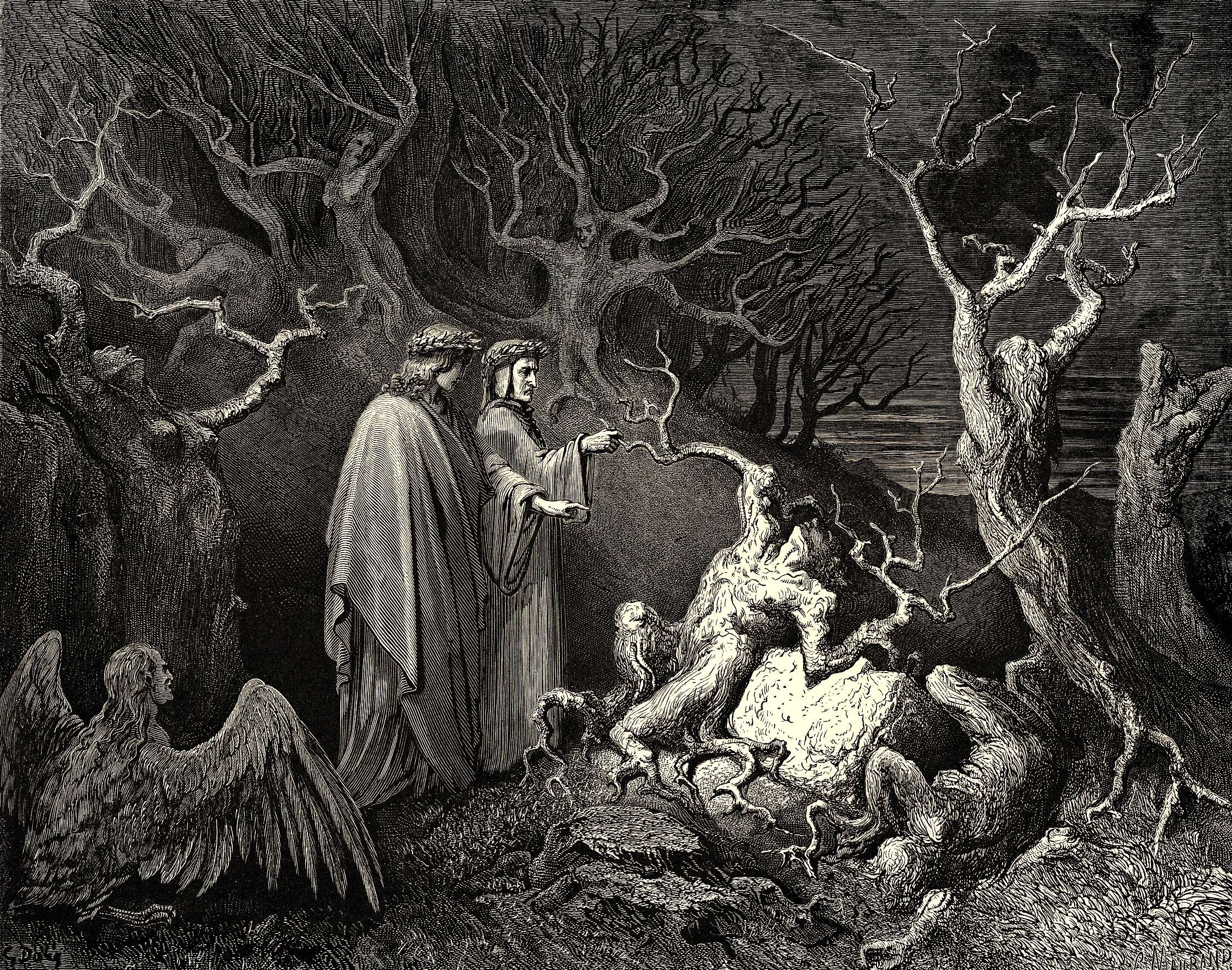
Image result for canto 13

Image result for canto 28 purgatorio

indrasmusings – WordPress.com

Paris Review

In Canto 28, we can see the first major juxtaposition of Purgatorio and Inferno. As both scenes embody a forest environment, Dante uses his great ability of imagery to illustrate what we find out is the Garden of Eden in canto 28. Dante starts the canto with with a lively attitude: “eager already to search within and about the dark forest, thick and alive, which tempered the new day to my eyes.” This reading portrays the first scene of livelihood–without worry– and “eagerness” of Dante. Dante no longer is to be cautioned or held back by Virgil because there is nothing to caution against.

The amount of beauty reflected in Dante’s words are unparalleled throughout his journey of Inferno and Purgatorio. Unlike the dark forest in canto 13 with the harpies and souls of the suicides, the Garden of Eden has but a sweet breeze, graceful enough to disturb the branches of the trees but not the resounding birds with their lovely songs. Dante elevates the beauty of the Garden to that of a beauty of scenic art; just as Dante incorporates fictional characters in inferno, he does the same in the garden of eden by incorporating Matelda as a nymph. She is a figure of beauty inhabiting the garden along the river and serves as partial tour guide of the Garden by explaining that the garden was meant to be a “token of eternal peace” for man because he was made in the image of God but fell from sanctity into sin.

Furthermore, canto 13 in Inferno depicts a forest that tokens the eternal suffering of sinners that think they can end their lives on their own terms. The forest of the harpies is inaccessible to the souls that aren’t victims of suicides–we know this– but it isn’t brought into full perspective until we read this canto of the garden of eden. The garden of eden is placed on top of the mountain, therefore being inaccessible to those unworthy of the perilous mountain climb. Dante does very well in comparing and contrasting the layout of inferno and Purgatorio, they seem to be perfectly juxtaposed in their structure and therefore in their scenic elements.

Dante’s True Paradise

(this post accidentally got erased late at night and i was really mad and re wrote it in the morning)


Canto 28 opens up with dante in the Garden of Eden. Dante seems to be free now to go about with his free will as he wants. According to Digital Dante, the first word of the Italian translation is “Vago” which means “desirous.”  Translated into English, the first lines go as follows: “Now keen to search within, to search around that forest, dense, alive with green, divine, which tempered the new day before my eyes, without delay, I left behind the rise and took the plain advancing solely, slowly across the plain, advancing solely, slowly across the ground where every part was fragrant.” Here he is describing the garden and his newly realized freedom to roam about it. How beautiful it is and how alive he feels within it. Beatrice claims Dante to be a witness of the “Earthly Paradise” and to write down everything he sees. This Canto is much brighter and more positive than anything we have read so far. In canto 30, digital Dante points out that the Italian words “altrui” and “altrove” are both “powerful indicators of the seduction of the new.” These last canti are all geared towards the future which is something new to the comedy. Virgil is finally gone and Beatrice has arrived.


A few ideas i have had for the final paper pertaining to Dante’s Inferno and Purgatorio is to write about some of my favorite scenes in relation to the art that I saw at the MET. Another subject I could touch on is more of a personal one where I could explain how difficult it has been for me to understand the comedy as a whole but then towards the middle of the semester become more interested and actually enjoying the read.

Final Piece for True Paradise

The final piece for Dante’s salvation is Beatrice. In canto 30 Dante is awestruck at finally seeing Beatrice after all those years “I saw the lady who had first appeared/ to me beneath the veils of the angelic/ flowers look at me across the stream” (Alighieri 64-66). But, this does not mean that Dante is going to Paradise. Here, Beatrice is depicted with a stern and harsh stance towards Dante, “just as a mother seems / harsh to her child, so did she seem to me/ how bitter is the savor of stern pity!”(Alighieri 79-81). Dante is to undergo one last trial or reflection in order to ascend. It makes you wonder if the journey through Hell and Purgatory was enough to grant entry to Paradise, but it is not that simple; Dante passed and spectated throughout his journey, not participating. Dante merely took lessons from cautionary stories. In order to truly grant access to Paradise he must look into himself, and renounce all his sins by feeling anguish and sorrow: “my reply/ be understood by him who weeps beyond,/ so that his sorrow’s measure match his sins”(Alighieri 106-108). We have come to know since the beginning of Inferno that Dante has overwhelming love for Beatrice. With that in mind, there is no room for self deception for Dante. He cannot hide or lie about his sins to himself or even his love. Thus, he finally rids himself of sin by acknowledging them and feeling remorseful.